Chapter One: Dr. Chen's Dilemma
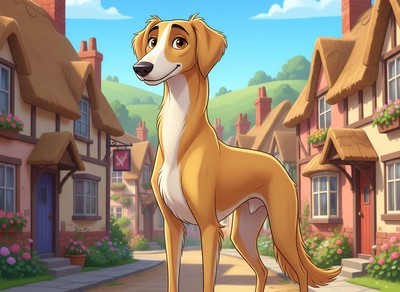
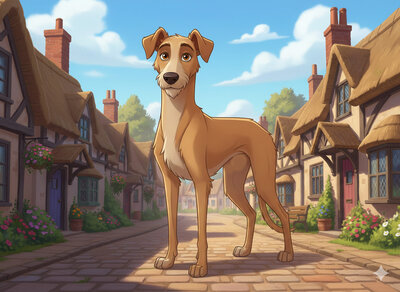
The March wind carried the salt smell of the sea as Harley stood on the cliff path above Charmouth Beach, his golden coat rippling in the breeze. Below, the famous Jurassic Coast stretched out in both directions—ancient cliffs full of secrets from millions of years ago.
"Why are we here again?" Oscar asked, his enthusiasm slightly dampened by the early morning chill.
"Dr. Chen from the university needs our help," Harley reminded him. "Apparently, there's been a problem with fossil thieves."
They'd received the unusual request two days ago. Dr. Sarah Chen, a palaeontologist who spent her days searching the beaches for prehistoric treasures, had heard about the Harley Pack's detective work. Now she stood on the beach below, waving up at them.
The pack made their way down the steep path, their sighthound agility making easy work of the descent. Dr. Chen greeted them warmly, though her face was creased with worry.
"Thank you for coming," she said, kneeling to greet each dog properly. "I know this might seem like a strange case, but it's becoming serious. Very serious."
She led them along the beach, past families with buckets and hammers searching for fossils in the fallen rocks.
"The Jurassic Coast is a World Heritage Site," Dr. Chen explained. "These cliffs contain one hundred and eighty-five million years of history. Finding fossils here is perfectly legal for the public—it's encouraged, actually. But there's a code of conduct. Important scientific discoveries should be reported so they can be properly documented and studied."
Dillon's ears pricked forward with interest. "What kind of discoveries?"
"Three weeks ago, I found evidence of an ichthyosaur—a marine reptile—eroding out of that cliff face," Dr. Chen pointed to a section of grey and brown layers. "A significant specimen. I marked the location, took photographs, and reported it. When I came back two days later to begin the careful excavation... it was gone."
"Gone?" Moss asked. "The whole thing?"
"Hacked out of the cliff and removed. No documentation, no proper excavation technique—just stolen. That was the first incident."
"And there have been more?" Harley guessed.
Dr. Chen nodded grimly. "Five in three weeks. Not just my finds—other researchers too. An ammonite cluster that Dr. Peterson discovered. A partial plesiosaur that a team from Bristol had been working on. Each time, we mark the location, return with proper equipment, and find it's been taken. Someone is watching our work and stealing the fossils before we can excavate them properly."
"Couldn't it be other fossil hunters?" Lewis suggested. "People who found them independently?"
"That was our first thought. But look at this." Dr. Chen pulled out her phone, showing them photographs. "These are the excavation sites. See how rough and hasty the work is? A proper fossil hunter would never extract something this carelessly. These specimens are likely damaged beyond repair. Whoever's taking them doesn't care about the fossils—they just want to sell them."
Timm was already scanning the beach with his keen eyesight. "How much are they worth?"
"A good ichthyosaur could sell for thousands on the black market. But that's not the point—these are irreplaceable scientific specimens. Some might be new species. Once they're taken without documentation, we lose invaluable information about Earth's history."
The pack exchanged glances. This was different from their previous cases—the victims weren't just people, but knowledge itself.
"We'll help," Harley said firmly. "Tell us everything. When do you typically find these specimens? How do you mark them? Who else knows about your discoveries?"
Dr. Chen smiled with relief. "Let me show you how we work. And fair warning—it involves a lot of patient observation and waiting."
From his position on the cliff path above, Billy's ears perked up. Patient observation and waiting? That sounded exactly like his kind of job.
Chapter Two: The Fossil Hunters' Routine
Dr. Chen spent the morning teaching the pack about fossil hunting. She showed them how the cliffs constantly eroded, revealing new specimens after storms. She explained how to spot the different rock layers—the dark shale, the limestone, the clay.
"Most people find ammonites," she explained, showing them a beautiful spiral fossil. "They're common and wonderful. But the really significant finds are rarer. You have to know what to look for."
Oscar was fascinated, sniffing at the ancient rocks. "How old did you say these were?"
"Between one hundred and eighty five and one hundred and ninety million years old. When dinosaurs walked the earth, this was all underwater. A warm, shallow sea full of incredible creatures."
Dillon was watching the other fossil hunters on the beach. "How many people know about your discoveries before they're stolen?"
"That's the strange part," Dr. Chen frowned. "We're very careful. When we find something significant, we only tell our immediate research team and report it to the heritage coast rangers. We don't post on social media or announce it publicly until after it's been properly excavated and documented."
"So it's someone who has access to those reports," Harley reasoned. "Or someone who's watching you directly."
"We've considered both possibilities. The rangers are all trustworthy—we've worked with them for years. But someone watching us..." Dr. Chen looked around at the busy beach. "There are always people here. Tourists, local fossil hunters, families. It could be anyone."
Moss had been studying the cliff face where the ichthyosaur had been stolen. "When do you typically come searching? Same time each day?"
"Usually early morning, right after high tide. The waves often uncover new material overnight. We check our regular sites, make our notes, take our photographs..."
"So anyone watching would know your routine," Lewis observed.
Dr. Chen nodded slowly. "I suppose they would. We've been coming here three or four times a week for months. Same time, same locations."
"And the thief strikes when?" Harley asked.
"Always at night. We mark a find in the morning, report it, plan to return the next day with proper equipment. By the next morning, it's gone."
Billy had been listening from above, and now he understood. The thief was watching the researchers during the day, learning what they'd found. Then returning at night to steal it. This was going to take careful observation—watching the watchers.
He settled into a comfortable spot on the cliff path where he could see the entire beach. He'd done this before with squirrels and crows. How different could watching humans be?
Chapter Three: Setting the Trap
That afternoon, the pack met with Dr. Chen's research team—three other palaeontologists and two heritage coast rangers. They gathered at the Charmouth Heritage Coast Centre, spreading maps across a table.
"We need to catch them in the act," said Dr. Peterson, a grey-haired researcher who'd lost the plesiosaur specimen. "But we can't just stake out the beach every night. It's a five-mile stretch of coastline."
"What if we gave them a target?" Harley suggested, in his own way—by pawing at a specific spot on the map and looking meaningfully at Dr. Chen.
Dr. Chen, who was beginning to understand how these remarkable dogs communicated, studied where Harley was indicating. "The eastern section, near the landslip? That's an active erosion site. Very promising for finds."
One of the rangers leaned forward. "Are you suggesting we pretend to find something there? Set a trap?"
"Exactly," Dr. Chen said, watching Harley's tail wag in confirmation. "We go through our normal routine. Make it obvious we've found something significant. Mark the location, take photos, make excited phone calls where others might overhear. Then we watch and wait."
"But there might not actually be anything there," Dr. Peterson pointed out.
"That doesn't matter," Dillon seemed to communicate through his intense, focused gaze at the map. "The thief won't know that until they try to steal it."
"We'll need to be watching all night," one of the rangers said. "I can arrange shifts with the team."
Moss made a small sound, and Dr. Chen laughed. "Or... we could have some expert observers with excellent night vision, keen hearing, and the ability to move silently."
"You want the dogs to stake out the beach?" Dr. Peterson looked skeptical.
"Why not? They found stolen sheep in underground tunnels. Surely they can spot fossil thieves on a beach."
The ranger who knew about the Harley Pack's previous adventures nodded slowly. "They've got a better track record than we do. And they won't be as obvious as humans camping out in cars."
"But they can't stop the thieves alone," Dr. Peterson argued. "If this is an organized operation—"
"They don't have to stop them," Dr. Chen interrupted. "They just have to find out who they are and where they're taking the fossils. Then we call the police with real evidence."
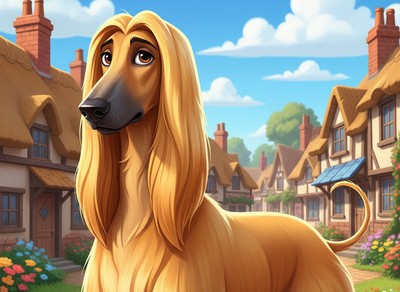
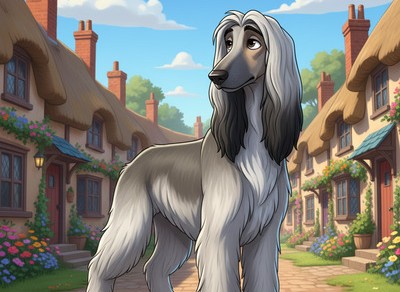
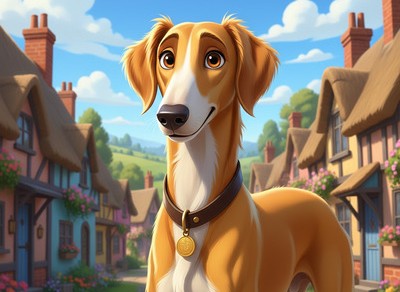
Harley looked at his pack. Timm was ready for action as always. Oscar looked excited despite the seriousness of the situation. Dillon was already thinking through the logistics. Lewis was nodding slowly, seeing the plan. Moss had that street-smart glint in her eye that meant she was ready for anything.
And somewhere above, Billy was settling in for a long observation session.
"We'll do it," Harley's posture seemed to say. "When do we start?"
Chapter Four: The Performance
The next morning, Dr. Chen put on quite a show. She arrived at the beach early with her team, made a big production of searching the eastern section, and then suddenly stopped, kneeling by the cliff face.
"Sarah? What is it?" Dr. Peterson called, playing his part perfectly.
"I think... I think this is a pleurosaurus!" Dr. Chen's excitement was partly genuine—she was, after all, an excellent actress, but also genuinely hopeful they might actually find something. "Look at this bone structure!"
She took extensive photographs, speaking loudly enough for nearby fossil hunters to overhear. "This is significant. Really significant. We'll need to come back tomorrow with the full extraction team."
She made several phone calls, again speaking clearly about the "major discovery" and the plans to excavate it the following day. She even placed bright orange markers around the site—impossible to miss.
The pack, appearing to be ordinary dogs out for a beach walk with their family, wandered casually nearby. But they were observing everything. Who was watching Dr. Chen? Who showed unusual interest in the marked site?
Oscar, with his playful nature, had a brilliant idea. He "accidentally" knocked over a child's bucket near a group of serious-looking fossil hunters, creating a minor commotion that let Timm get a good look at what they were carrying. Just regular ammonites and a few belemnites—nothing suspicious.
Moss engaged with some of the regular local hunters, the ones Dr. Chen had said were trustworthy. They petted her and talked about their finds, giving her a chance to observe their genuine enthusiasm and proper technique.
Lewis and Dillon worked as a team, one creating a distraction while the other checked out anyone with professional equipment—cameras, GPS devices, or geological hammers that looked too new.
And Harley watched it all, his keen Saluki eyes missing nothing.
By the time Dr. Chen and her team left for the day, making one final loud comment about "seeing the specimen tomorrow," the pack had identified three possible suspects:
A man in his forties with expensive equipment who'd been filming the marked site with a professional camera. A younger couple who'd shown up right after Dr. Chen's "discovery" and spent too much time taking notes. And a local fossil hunter who'd seemed overly interested in when exactly the team planned to return.
That evening, as the sun set over the Jurassic Coast, the pack took up their positions. Harley and Dillon hid among the rocks near the marked site. Timm and Oscar positioned themselves higher up, where they could see both the beach and the car park. Lewis and Moss stayed mobile, ready to follow anyone suspicious.
And Billy, from his clifftop vantage point, watched everything. He'd been there all day, unnoticed as always, and he'd seen something the others hadn't. The man with the expensive camera? He'd left hours ago. The young couple? They'd gone too, chattering excitedly about their genuine finds.
But the local fossil hunter—the one who'd seemed too interested—he'd returned. Twice. Just walking past casually, but always glancing at the marked site. And the second time, he'd made a phone call.
Billy settled in for a long night of watching. This was what he did best.
Chapter Five: The Midnight Thieves
The moon was bright over Charmouth Beach, turning the limestone cliffs silver and casting long shadows across the sand. The tide was out, and the marked excavation site was clearly visible, orange markers glowing in the moonlight.
Harley's ears twitched. Sound carried differently at night, and he'd learned to filter out the natural noises—waves, wind, the occasional bird—from anything unusual.
There. Footsteps. Trying to be quiet but not quite succeeding on the loose pebbles.
He signaled to Dillon with the softest of sounds, and both dogs pressed lower into their hiding spot among the rocks. From their position, they watched two figures approach the marked site. Both wore dark clothing and carried backpacks. One had a powerful torch, though he kept it pointed down. The other carried what looked like geological tools.
"This is it?" the first man whispered. "Doesn't look like much."
"Chen wouldn't mark it if it wasn't significant," the second replied. It was the local fossil hunter they'd noticed earlier. "She's found some of the best specimens on this coast. If she says it's important, it's worth taking."
"And your buyer's ready?"
"Already lined up. There's a private collector in Germany who'll pay top price, no questions asked. Loves having things no one else can study. Makes him feel special."
The first man knelt by the site and began working with a small pick and crowbar. "Careful," his partner hissed. "We need to get it out intact. The last one was too damaged—had to settle for half price."
"That's because you rushed me. This one we do properly. Well, as properly as possible for a midnight theft."
Harley looked at Dillon. They needed to see more—needed to catch them with actual fossil material, or the evidence wouldn't stand up. But they also needed to know where these thieves were taking the specimens.
High above, Billy had seen the thieves arrive. He'd also seen something else—a van parked in the beach car park, its engine running quietly. A third person waited inside. This was organized.
Billy made a decision. He couldn't alert the pack directly without risking detection, but he could alert someone else. He ran, quiet as shadow, to the Heritage Coast Centre where the night ranger was working late.
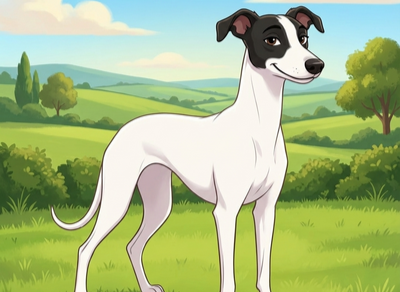
The ranger looked up, startled, as a small white and black lurcher appeared at his window, pawing urgently at the glass.
"What the—aren't you one of the Harley Pack?" The ranger had heard all about the dogs. "What's wrong, boy?"
Billy ran a few steps toward the beach, stopped, looked back. Ran again, stopped, looked back.
"You want me to follow you?" The ranger grabbed his radio and torch. "Right. Let's go."
Chapter Six: The Recovery
Down on the beach, the thieves had been working for twenty minutes. They'd excavated a section of cliff, and one of them held up a fragment triumphantly.
"Is that it?"
"This is... there's nothing here. Just some broken shell fragments. Where's the pleurosaurus she was talking about?"
"Are you sure this is the right spot?"
"The markers are right there! This is exactly where she marked it."
The thieves stared at each other as realization dawned.
"It was a trap," the local fossil hunter said slowly. "She was faking. This whole thing was a setup."
"Then we need to go. Now."
But it was too late. The ranger, guided by Billy and now joined by the police who'd been waiting on standby, emerged from the beach access path. The pack revealed themselves from their hiding spots, six elegant sighthounds suddenly surrounding the thieves, blocking any escape routes.
"Don't move," the ranger called out. "You're trespassing on a protected site and attempting to steal paleontological specimens."
"There are no specimens!" one thief protested.
"No, but we have you on record attempting to steal them. And I think we'll find plenty of evidence in that van of yours. And in your homes." The police officer was already radioing for backup.
The thief who'd been the local fossil hunter slumped in defeat. "How did you know?"
Dr. Chen emerged from where she'd been waiting near the Heritage Coast Centre. "We didn't know for certain. But we knew someone was watching our work and stealing our finds. Someone who understood enough about fossils to target significant specimens. Someone with local knowledge and connections."
She looked at him sadly. "I remember when you were genuinely passionate about paleontology, Mark. When did it become just about money?"
The man looked away, ashamed.
The second thief was more defiant. "You can't prove we stole the other fossils."
"Actually," Dr. Chen said calmly, "if we search your van and your properties, I suspect we'll find evidence. And your buyer—you mentioned Germany? International trafficking of paleontological specimens is a serious crime."
The police were already searching the van. Within minutes, they found tools, packaging materials, and most damning of all, a limestone fragment with distinct bone patterns visible.
"That's from the ichthyosaur," Dr. Chen said quietly, examining it. "The one stolen three weeks ago. You've damaged it badly with your hasty extraction."
Chapter Seven: Missing Pieces
Over the next few days, as the police investigation unfolded, the full extent of the operation became clear. The two thieves had been operating for months, watching researchers, stealing specimens, and selling them to private collectors around the world. Their van alone contained fragments of four different significant fossils.
But there was a problem. The police had recovered some material, but not the complete specimens. The ichthyosaur was incomplete. The ammonite cluster was missing pieces. The plesiosaur partial skeleton that Dr. Peterson had found? Only a few bones were recovered.
"They must have already sold the best pieces," Dr. Peterson said glumly as they stood in the police evidence room. "Those are gone forever."
"Or hidden somewhere," the investigating officer suggested. "The suspects aren't talking, and we haven't found their storage location."
Harley looked at his pack. This wasn't over. The thieves were caught, but the stolen fossils—irreplaceable scientific specimens—were still missing.
That evening, the pack held a meeting in their favorite spot overlooking the village.
"We need to find where they were storing the fossils before shipping them," Harley said, in the way dogs communicate through looks and subtle movements.
"They had to have somewhere local," Dillon reasoned. "Somewhere they could keep delicate specimens safe while arranging sales."
"Not their homes," Moss added. "Police searched those. Nothing there."
"What about the van?" Oscar suggested. "Could there be a hidden compartment?"
Lewis shook his head. "Police went over it thoroughly. If there was one, they'd have found it."
They sat in contemplative silence, watching the sunset paint the Dorset sky in shades of orange and purple. Somewhere out there were fossils worth thousands of pounds—but more importantly, worth immeasurable scientific value.
Billy, who'd been quietly sitting as usual, suddenly stood up. He'd been thinking about something ever since they'd caught the thieves. The man called Mark, the local fossil hunter. He'd made a comment before being arrested: "The last one was too damaged—had to settle for half price."
The last one. Which meant there was a buyer who'd already received damaged goods. Someone who might know more about the operation.
But how could they communicate this to the police? Or to Dr. Chen?
Billy looked at Harley, and something passed between them—the understanding that comes from being pack mates. Harley turned to the others, and somehow, they all knew. They needed to search not for where the fossils were stored, but for where they'd already been sold.
Chapter Eight: Following the Money
Dr. Chen was brilliant at many things, but following criminal money trails wasn't one of them. However, she knew someone who was: Detective Inspector Sarah Morrison, who specialized in stolen artifacts and antiquities.
When Dr. Chen explained what the pack seemed to be suggesting—that they should trace who'd already purchased damaged specimens—DI Morrison's eyes lit up.
"You're right. If someone bought damaged goods, they might be willing to cooperate to avoid charges. And they might know where the better specimens are being kept."
She pulled up the thieves' phone records. "Look at this. Multiple calls to a number in Dorchester. And here—payments from an account registered to an address in Weymouth."
Within two days, DI Morrison had identified three local collectors who'd purchased fossil specimens from the thieves. Two claimed innocence, insisting they thought the fossils were legally obtained. But the third, a wealthy businessman with a large home near Lyme Regis, was more cooperative.
"I bought an ammonite cluster," he admitted. "Paid three thousand pounds for it. But when it arrived, half the specimens were broken. I complained, and the seller—Mark, he called himself—said he had better material coming. Said he had access to 'fresh specimens' from the cliffs."
"Did he say where he was keeping them?" DI Morrison asked.
"Not directly. But he did mention something about an old building near Charmouth. Said it was perfect because it was climate-controlled and no one ever went there anymore."
That wasn't much to go on, but it was something. The pack, Dr. Chen, and DI Morrison studied maps of the Charmouth area, looking for abandoned buildings.
"There," Dr. Peterson pointed. "The old coastguard station. It's been empty for five years, waiting for renovation funding. It has underground storage—they used to keep rescue equipment there."
"Climate-controlled?" Dr. Chen asked.
"The basement level is naturally cool and dry. Perfect for preserving... well, anything really."
DI Morrison radioed for backup, and within the hour, they had a warrant to search the old coastguard station.
Chapter Nine: The Hidden Collection
The old coastguard station sat on the cliff edge between Charmouth and Lyme Regis, its white-painted walls faded and its windows boarded up. It looked thoroughly abandoned.
But when the police forced the door, they found that the basement had been recently used. And what they found there made Dr. Chen gasp.
Carefully wrapped in protective material, stored in climate-controlled conditions, were over twenty significant fossil specimens. The missing pieces of the ichthyosaur. The complete ammonite cluster. The plesiosaur bones. And more—specimens from other researchers, other sites, thefts that hadn't even been reported yet.
"This is incredible," Dr. Peterson breathed. "Some of these are... this is a new species of crinoid. And this—Dr. Chen, is this what I think it is?"
Dr. Chen was staring at a large specimen, carefully cradled in custom foam. "It's a pterosaur. A flying reptile. We don't get many of those in this area. This is... this is museum-quality."
"All stolen," DI Morrison said grimly. "All meant to disappear into private collections, lost to science forever."
The pack wandered through the basement, their keen noses detecting something else—the distinct smell of recent human presence. The thieves had been here recently, probably preparing these specimens for shipment.
"We got them just in time," Dr. Chen said softly, running her hand gently over the ichthyosaur bones. "Another few days and these would have been gone forever."
As the police carefully documented everything for evidence, Dr. Chen knelt down to address the pack directly.
"You did this. All of you. You helped us catch the thieves, and you helped us find these priceless specimens. On behalf of science, of history, of everyone who will get to learn from these fossils—thank you."
Oscar's tail wagged happily. Timm stood proud. Dillon looked satisfied in his thoughtful way. Lewis and Moss exchanged pleased glances.
And Harley, looking at his pack, felt that familiar warmth of accomplishment. But he knew the real hero of this case.
He turned to look at the doorway, where a small white and black lurcher sat quietly, watching. Billy had been the one to alert the ranger. Billy had been the one to think about tracing the sales. Billy, the patient observer, had been essential to solving this mystery.
Billy's tail wagged slowly as he met Harley's gaze. He didn't need praise or recognition. He was just happy to have helped. That was enough.
Epilogue: Legacy Preserved
The recovery of the stolen fossils made national news. The thieves were sentenced to prison time and substantial fines. The private collectors who'd knowingly purchased stolen specimens were prosecuted. And new security measures were put in place to protect the Jurassic Coast's paleontological treasures.
But the best part, for Dr. Chen and her team, was what came after.
The ichthyosaur, when fully excavated and cleaned, turned out to be one of the most complete specimens ever found on the Jurassic Coast. It's now on display at the Natural History Museum in London, with a plaque that reads:
"Ichthyosaur specimen recovered through the efforts of Heritage Coast rangers, Dorset Police, and the Harley Pack—a team of dogs whose dedication to solving mysteries helped preserve this irreplaceable piece of Earth's history."
The pterosaur was even more significant—a species previously unknown from this region, providing new insights into the ecosystem of the Jurassic period.
Dr. Chen established a new program: the Fossil Guardian Initiative, training volunteers to help monitor the coast and report suspicious activity. And she insisted that the Harley Pack be named as honorary guardians.
"You've taught us something important," she told them at the official ceremony on Charmouth Beach. "That protecting history takes all kinds of skills. Scientific knowledge, yes. But also observation, patience, teamwork, and the determination to see things through."
Billy, sitting slightly apart from the other six dogs, felt a warm glow of pride. He'd helped. Really helped. Not by being brave or fast or clever in the obvious ways, but by doing what he did best—watching, waiting, and noticing the details others missed.
As the ceremony concluded and people returned to fossil hunting on the beach, the pack sat together on the cliff path, looking out over the beautiful Jurassic Coast.
"Another mystery solved," Oscar said happily.
"And real history preserved," Dillon added with satisfaction.
"Those fossils will teach people about the ancient world for generations," Lewis mused.
"All because we noticed things didn't add up," Moss said practically.
Timm looked at Harley. "What's next for the Harley Pack?"
Harley considered the question, his amber eyes thoughtful. "Dorset is full of mysteries. And as long as there are puzzles to solve and people who need help, we'll be there."
"Together," Billy added quietly, and this time he was sitting right in the middle of the pack, not at the edges.
"Always together," Harley confirmed.
Because that's what packs do. They stick together, they use all their different strengths, and they protect what matters—whether that's stolen sheep, scared old men trying to honor their fathers, or fossils that tell the story of life on Earth millions of years ago.
The Harley Pack had solved their fourth mystery. But somewhere in Dorset, another adventure was waiting.
And they'd be ready.
The End
Author's Note: The Jurassic Coast is a real World Heritage Site stretching 95 miles along the Dorset and East Devon coast. Fossil hunting there is legal and encouraged, but important finds should be reported to local museums or the Heritage Coast rangers. The code of conduct mentioned in this story is real, and helps preserve this incredible geological resource for everyone to enjoy and learn from.